
Social protests exposed systemic problems in the Mangystau region — employment, infrastructure, environmental risks, and the quality of life of oil workers. These events became a turning point after which the state was forced to move from fragmented decisions toward a more comprehensive policy aimed at improving living conditions in oil-producing settlements. The village of Tenge became one of the settlements included in this reform: the local governance system is being updated, public infrastructure is developing, small businesses are being supported, and attempts are being made to diversify an economy that for many years depended entirely on oil production.
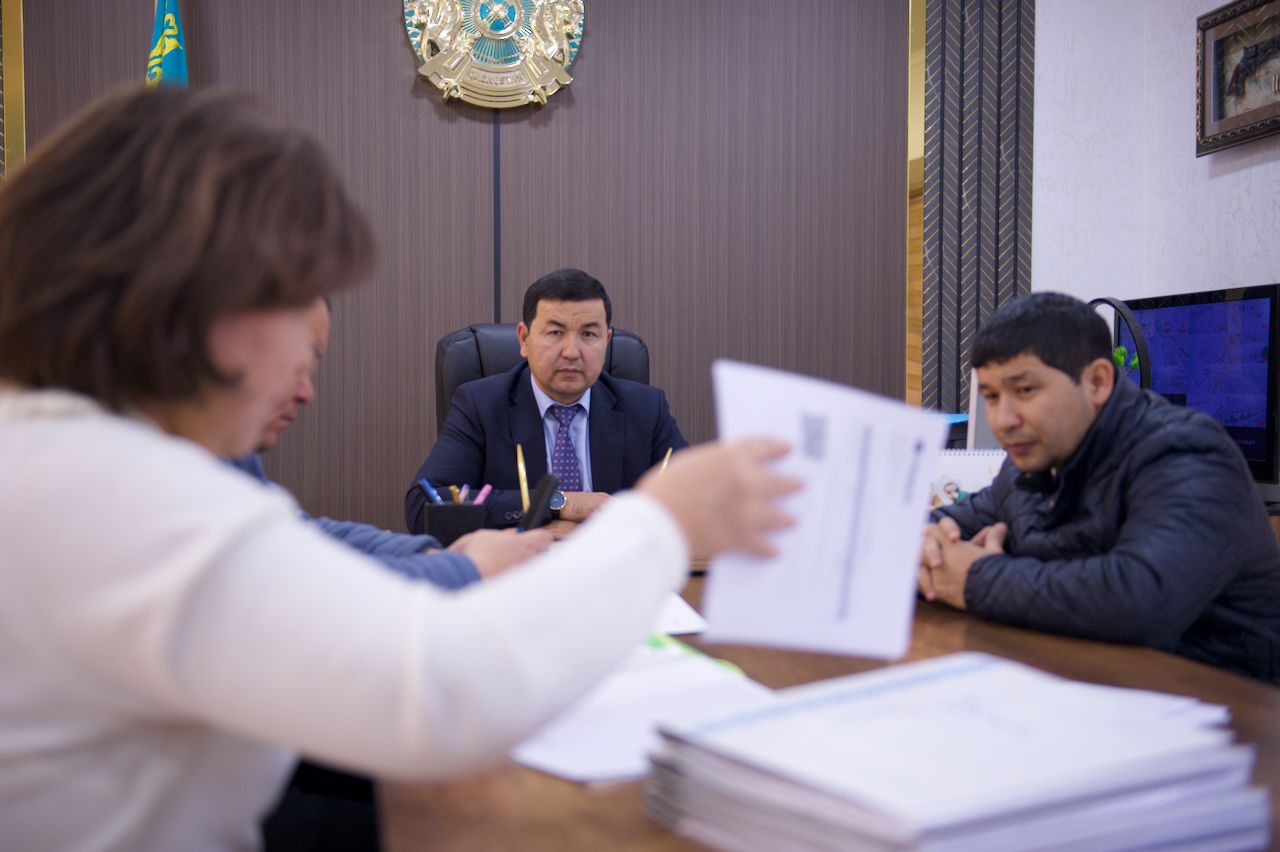
Akim Zhalgas Agissov was born in the village of Tenge, which makes him particularly invested in the development of his native settlement. A former businessman, he came to the akimat with a clear understanding of how the entrepreneurial environment works from the inside. This background helps him build effective dialogue with investors and identify growth points for the village that had previously gone unnoticed. Since March 2025, he has headed the local administration, bringing a pragmatic and modern approach to governance.
“Our village is a kara shanyrak with a sixty-year history,” says Akim Zhalgas Agissov. “It has a population of eighteen thousand people. Most residents are families of oil workers. In addition, there are farmers and peasant households engaged in livestock breeding — camels, horses, and sheep. We have three secondary schools, one private and two public, two private kindergartens, a polyclinic, an outpatient clinic, a day hospital, a local police station, a railway, and two parks — Tauelsizdik and Anaga Tagzym. Unfortunately, there is not a single café or restaurant in the village.”
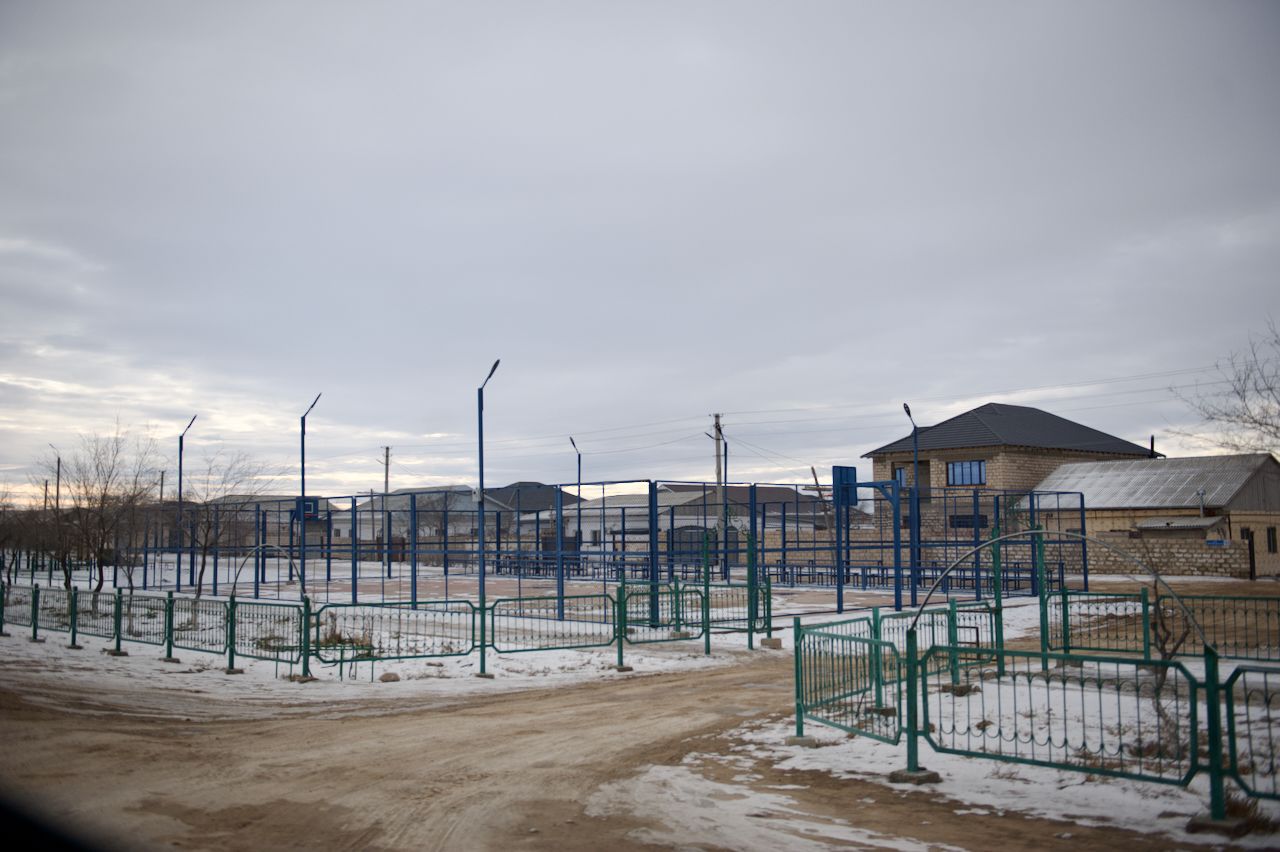
“In rural areas, young people often have nothing to do, so they move to Aktau. We need a center for them where they can study robotics, mobile content creation, financial literacy, sewing, prepare for the Unified National Testing, and learn entrepreneurship. We are gradually attracting investors. For example, this year a children’s entertainment complex ‘7/7’ for 100–120 people and a fitness center with a football arena will open. An ethno-village with family recreation zones, yurts, artificial streams, and environmentally friendly products is also planned. In 2026, we plan to build two more parks of 5,000 and 7,000 square meters so that residents have places to walk.”
The village’s main problem is the minimal share of local production. Most goods are brought in from Uralsk, Aktobe, Orenburg, Samara, and Astrakhan. Therefore, small and medium-sized businesses are being comprehensively supported. Entrepreneurs are offered land plots without auctions, through direct allocation. Negotiations are underway for the construction of a horse and camel milk processing plant in 2026–2027.
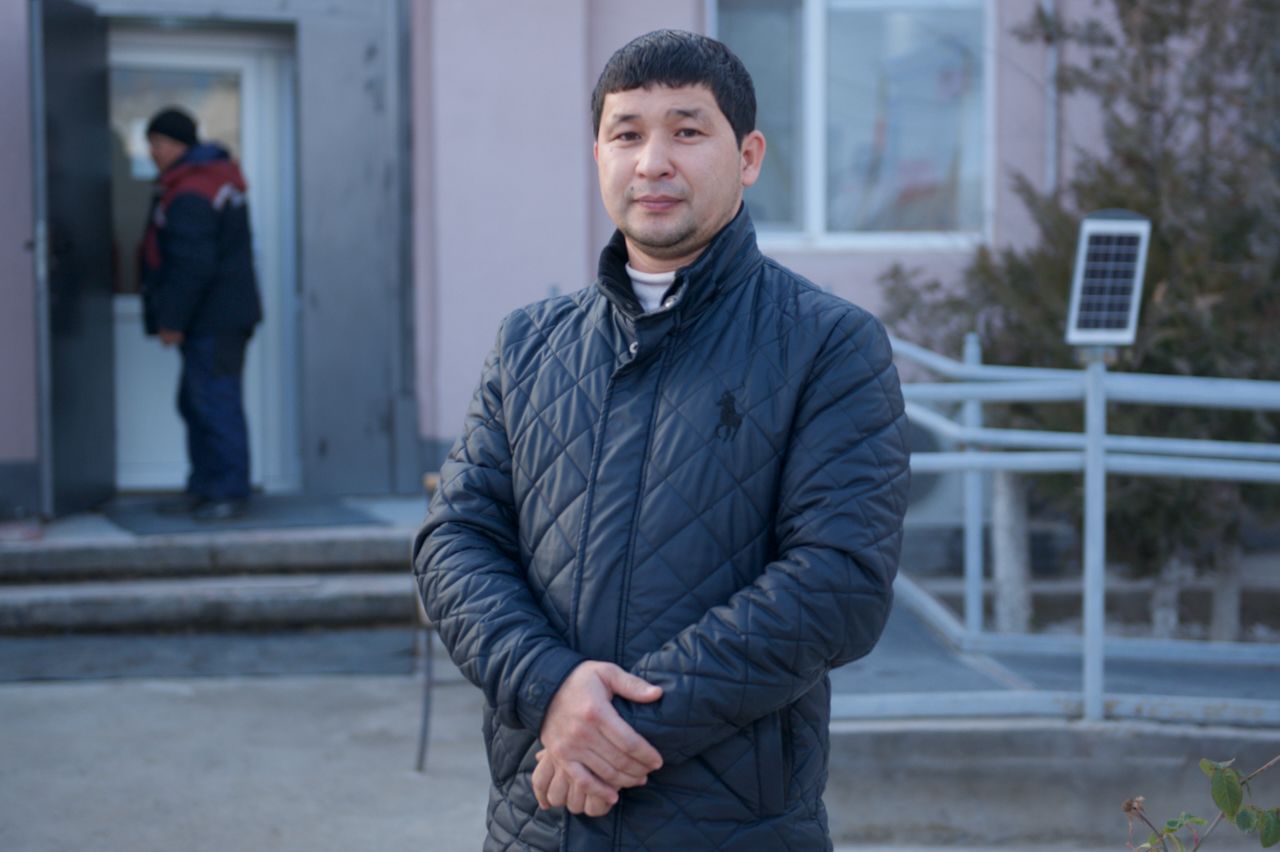
“We want to open production under the ‘Auyl Amanaty’ program,” shares entrepreneur Makhmud Kumisbayev. “We plan to create a cooperative, purchase additional livestock, and open a dairy plant and a shubat production workshop. About twenty people will work at the dairy plant, and another ten will be hired for the farm. We currently have a farm located about 40 kilometers from Tenge with nine hundred camels. The akimat is interested in us launching as soon as possible, so negotiations and paperwork are underway.”
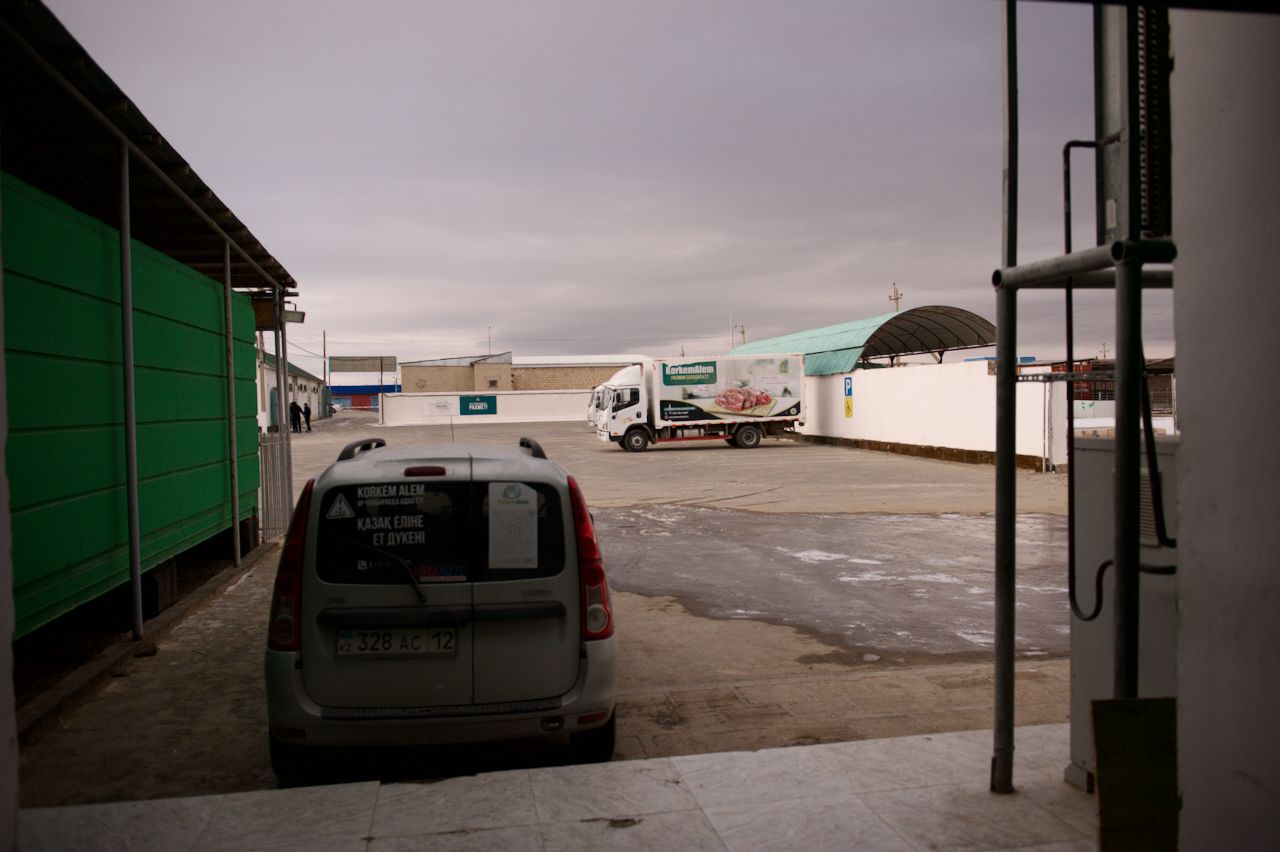
While the village administration is planning to attract new investors and develop a dairy cluster, Tenge already has a successful example of local production in operation. A meat processing plant functions here, providing jobs for local residents and supplying products far beyond the village, with its own retail outlets in Aktau and Zhanaozen.
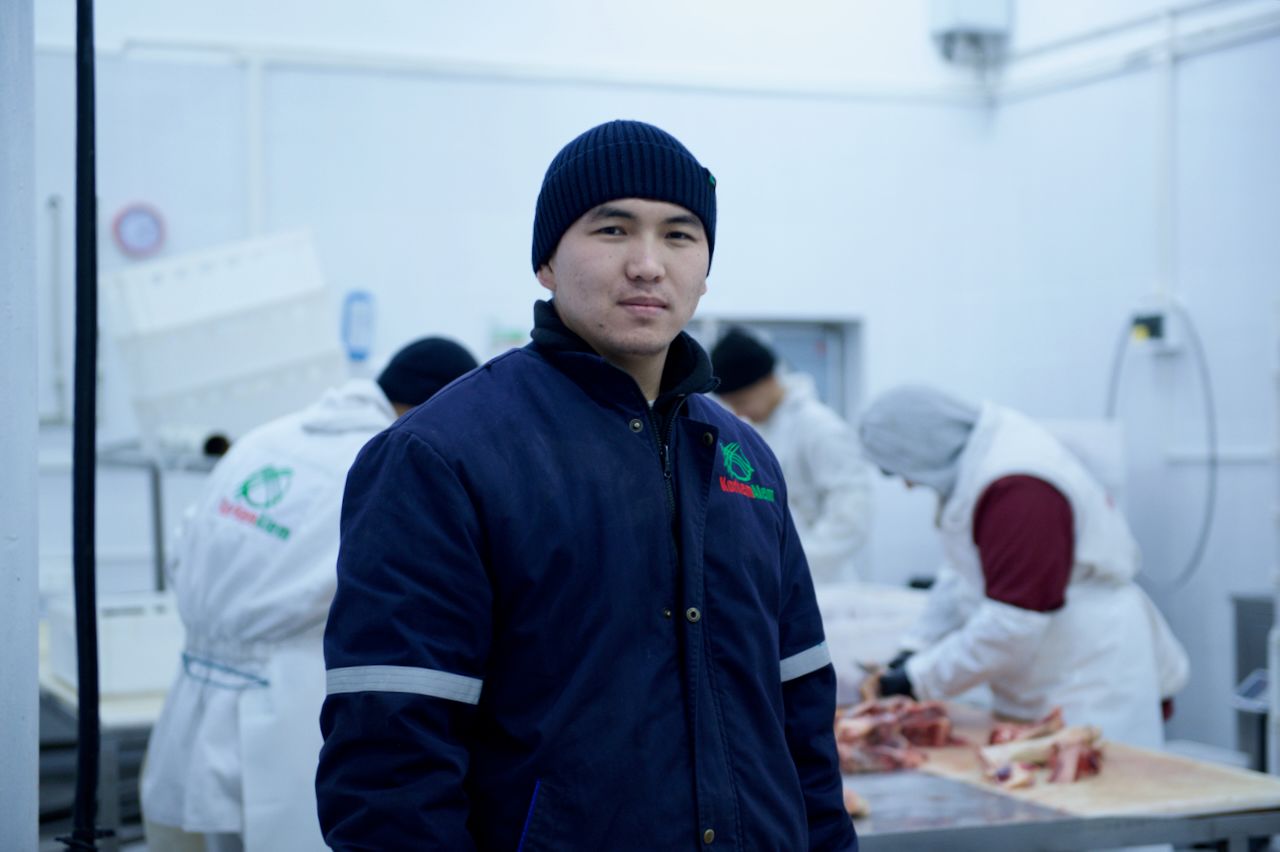
“On average, we process about one ton of meat per day,” says Aidos Bayzhigitov, head of the assembly workshop. “Each worker processes an average of 50–60 kilograms of meat per hour. Production volumes depend on orders. We have several types of products: part of the meat is cut on a special machine and placed on display, another part is deboned. We also produce meat cuts and minced meat.”
The company operates three retail outlets — two in Zhanaozen and one in Aktau. A significant share of sales comes from the B2B segment, including shops and restaurants in Aktau and Zhanaozen, as well as small retail points that place daily orders. Most orders are individual — meat cuts, minced meat, and recently sugar bones and steaks have also been in demand.
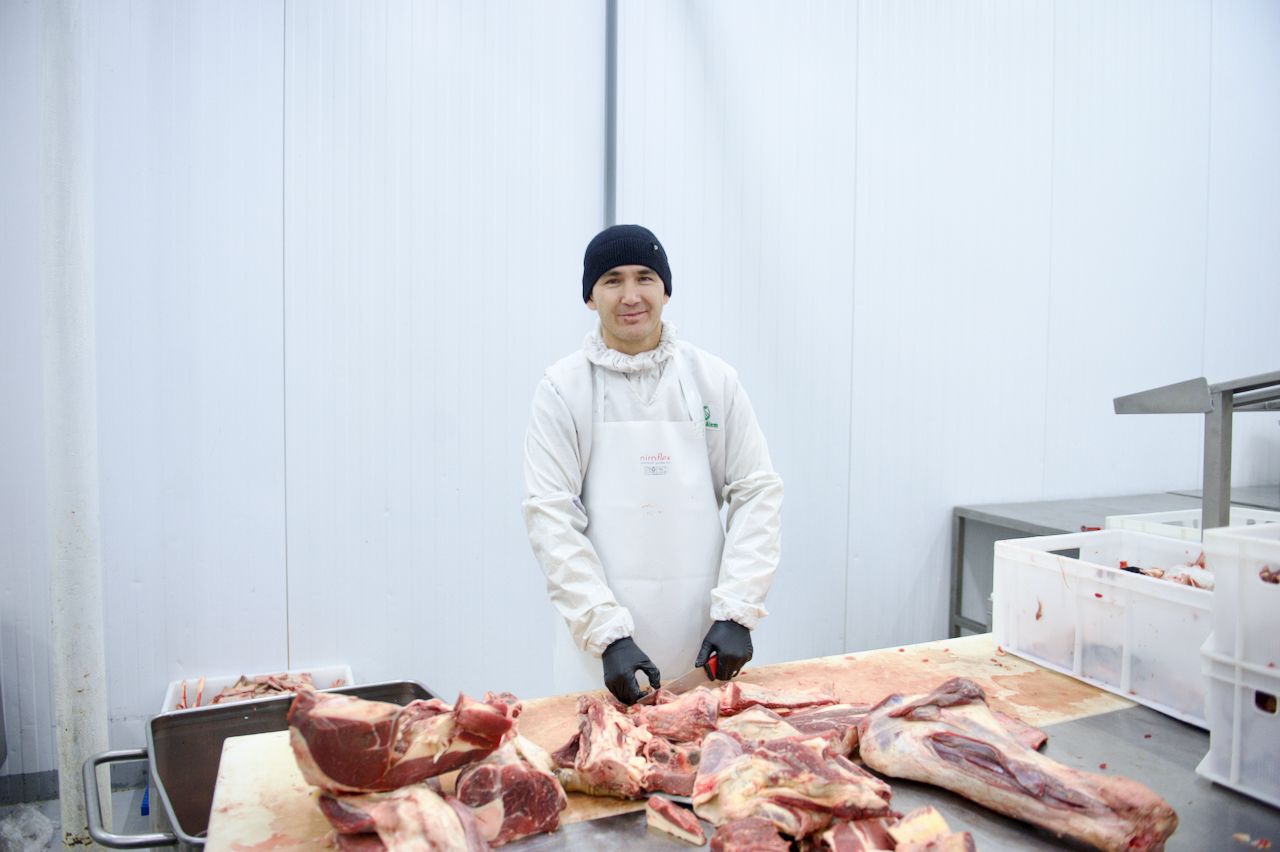
“Each part of the carcass has its own purpose and processing technology. For example, shanks and ribs are sent for disposal, while the rest is distributed by product type,” says butcher Nurlan Umbetov. “I started working here in 2021. Working conditions are normal; there are different moments, but overall everything suits me.”
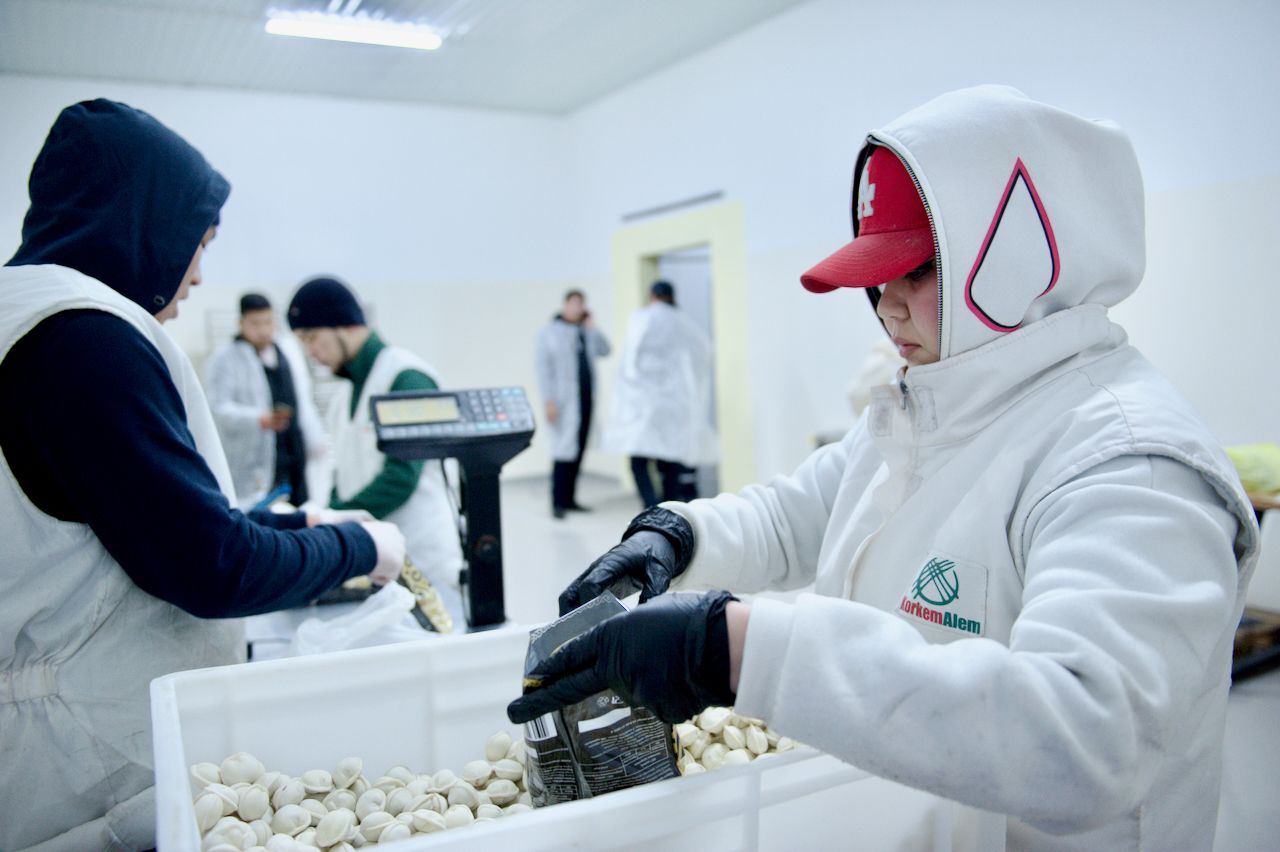
In addition to meat cutting, the plant has established the production of semi-finished products. In the dumpling workshop, two packers and a junior technologist work daily, packaging up to 400 kilograms of products. Monthly production reaches 3–4 tons, with work carried out strictly according to orders. Producers emphasize natural composition, using pure meat without additives.

Residents of Tenge assess the ongoing changes differently: some rejoice at the new asphalt, others complain about unemployment, while some actively participate in the village’s public life.
“I was born in the Shomanai district of the Karakalpak Autonomous Region,” says elder Karzhaubai Reimbaiuly. “I graduated from the Nukus Agricultural College. I served in the Red Banner Far Eastern Military District in an aviation unit as a communications mechanic. After the army, I worked as an agronomist at the Shomanai state farm. When resettlement to our historical homeland in Mangystau began, we moved to Tenge. Here I joined Ozenmunaigas, working as an assistant driller, then as a driller and a master. I worked in the oil industry for more than thirty-five years and retired in 2015. I am a simple oil worker, but by vocation a folk genealogist and poet. I wrote the books ‘Er Shotan,’ the poetry collection ‘Omir Ainasy,’ and ‘Arkalatkan Batyr,’ dedicated to Akpan Batyr. In my youth, my mentors were folk poet-genealogist Omirzak Kalbaiuly and poet Esengali Bokenbayev — they defined my creative path. Today I actively assist the village and city administration of Zhanaozen, participating in public and organizational matters. When Iranian guests visited our region, I was entrusted with coordinating meetings with residents of Zhanaozen, and I continue to actively participate in the life of our village.”
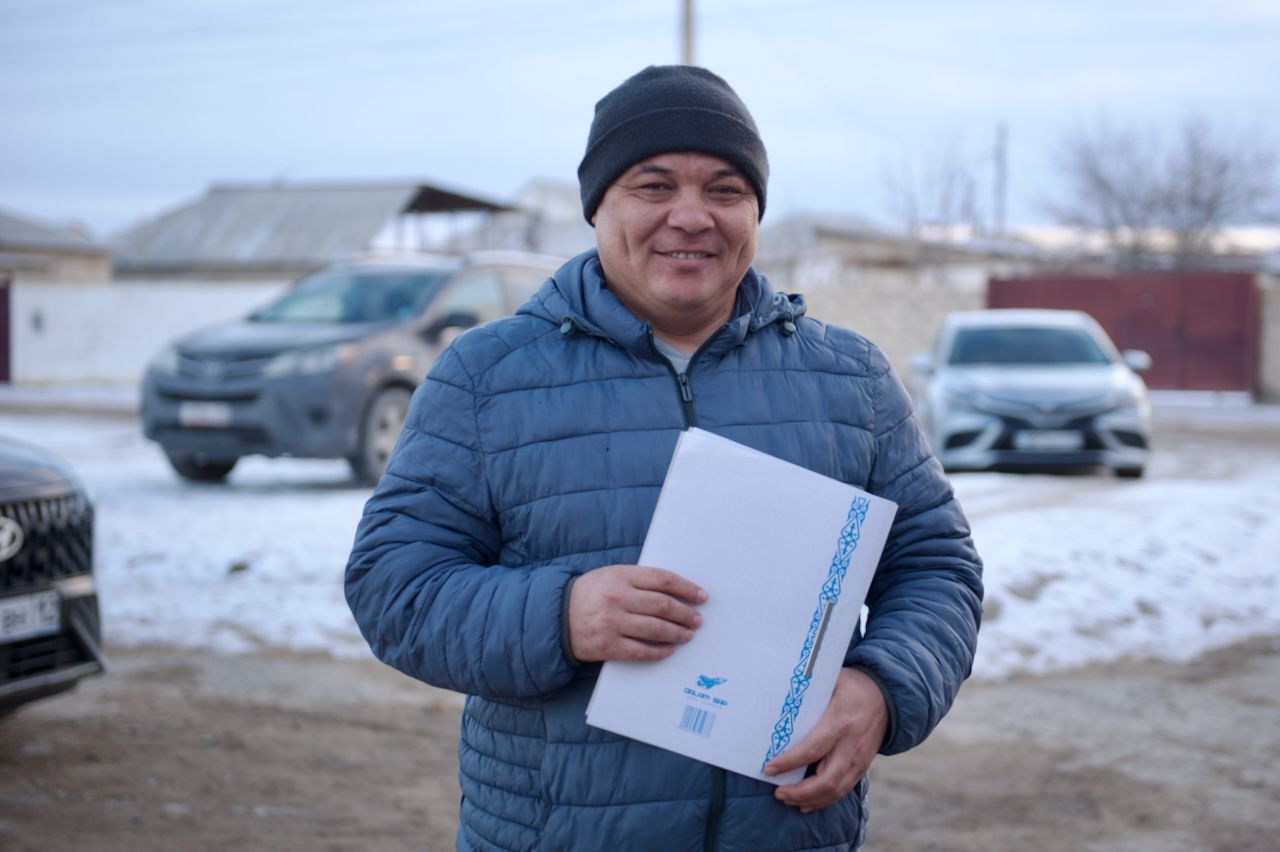
“I am an oil worker employed by Ozen Service,” says Tenge resident Begaidar Zhylkybayev. “Since the new akim arrived, our village has changed significantly. Children’s playgrounds have been built, roads are being asphalted, and a new bicycle path has appeared toward the railway station. Of course, we would like all streets to be fully paved. We are now submitting our own project proposals to the akimat aimed at building entrepreneurial facilities and developing agriculture in the village.”

“I was born in Tenge and live and work here,” says shop employee Aisulu Isakova. “I have seven children — the eldest is 21, the youngest is 5. People in our village are very friendly and welcoming. What do we lack? There is no café, and there is a shortage of greenery and trees, overall landscaping is insufficient. So we try to plant ourselves.”
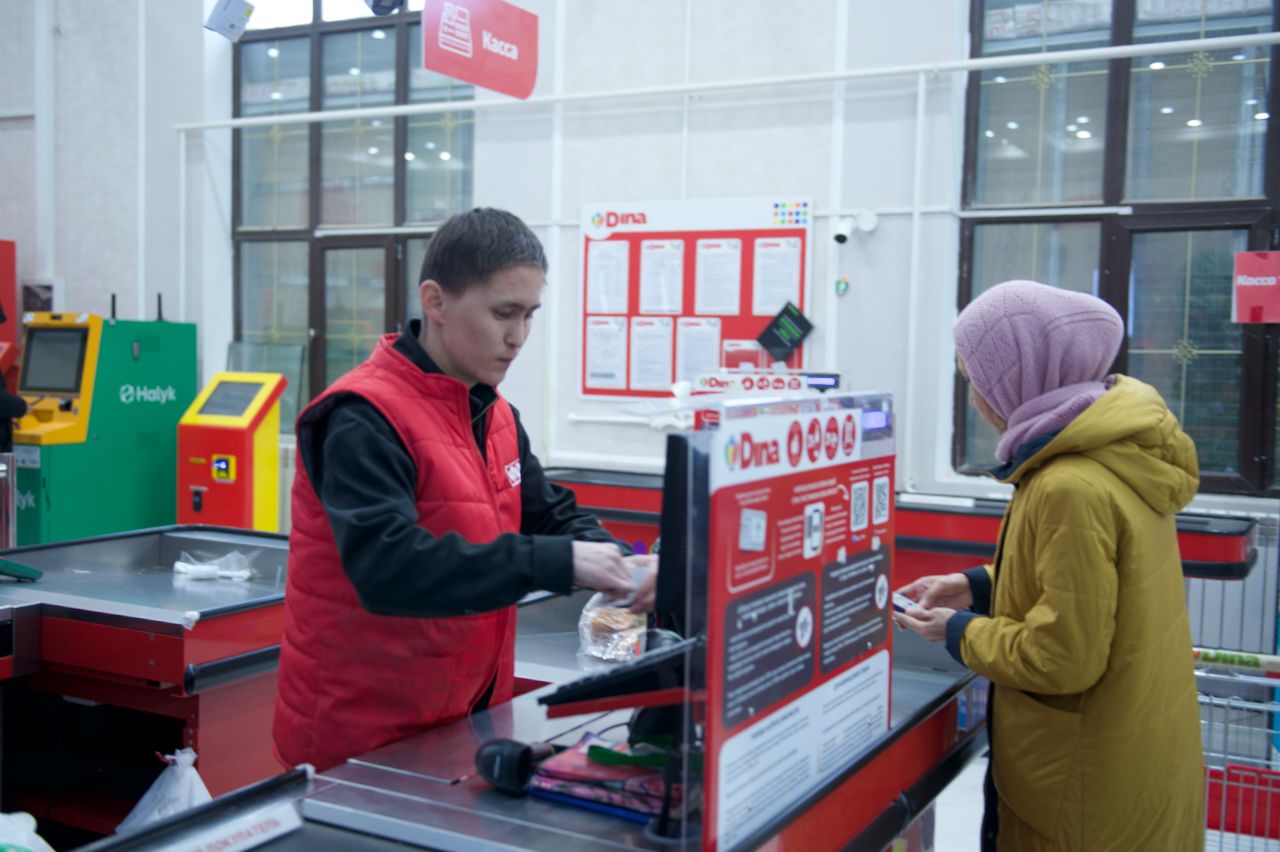
“No complaints, everything is good,” says cashier-salesperson Orynbasar Duisenov. “I’ve been working here for about six months as a cashier and universal salesperson. I was born in Tenge, I like it here, conditions are good, and most importantly, there is work.”
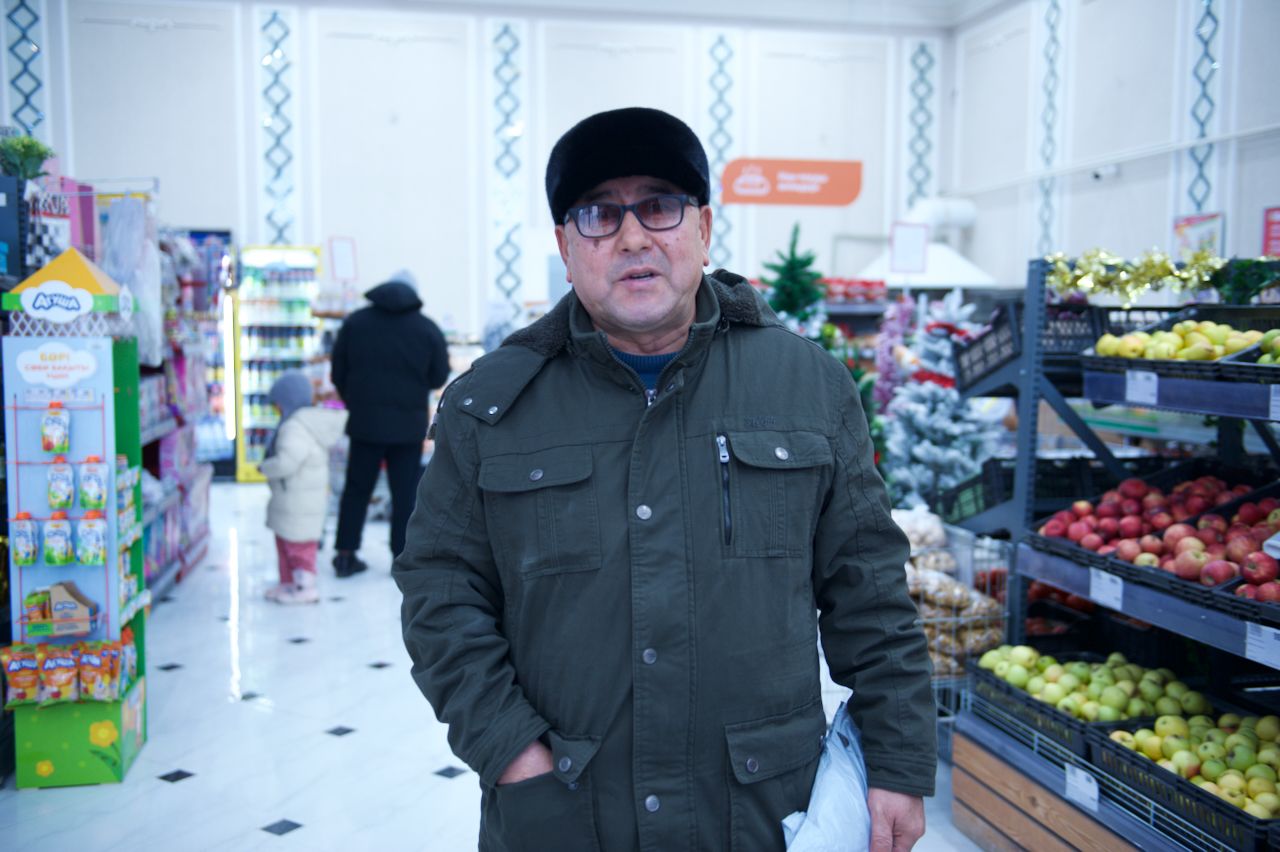
“We have lived in Tenge since 1977,” says Nurmukhan Zhumaliev, a machine operator at a transport enterprise. “My children and grandchildren were born here, praise be to Allah. This year, with the arrival of the new akim Zhalgas, we finally saw asphalt that had not existed for sixty years. Honestly speaking, with the new akim a lot has changed: youth have become more active, the village is being improved, lighting and roads have appeared.”
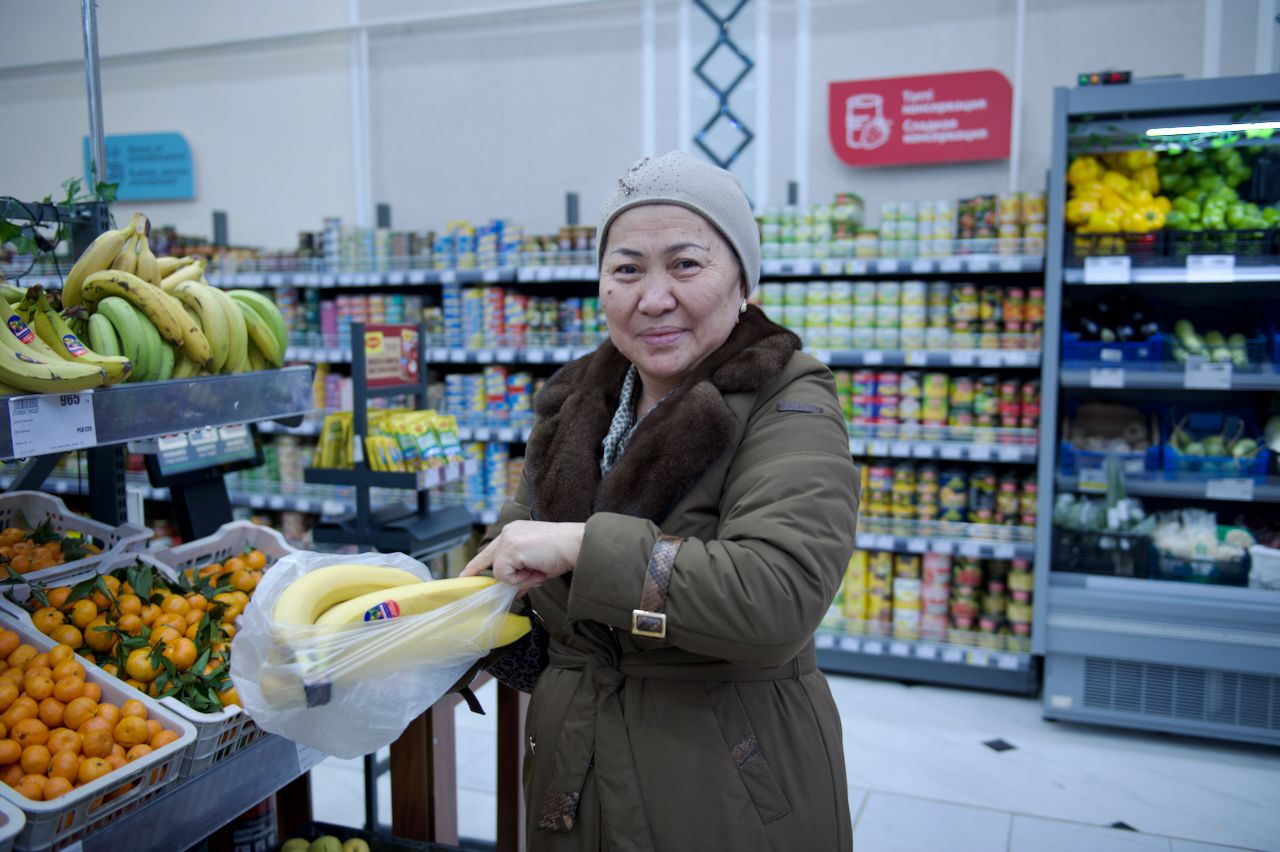
“I was born in Ashgabat, Turkmenistan,” says village resident N. Zhanaeva. “My parents were also born there. In 1986, I returned to Kazakhstan and have lived in Tenge ever since. Overall, I am satisfied here, and recently the changes have become especially noticeable.”
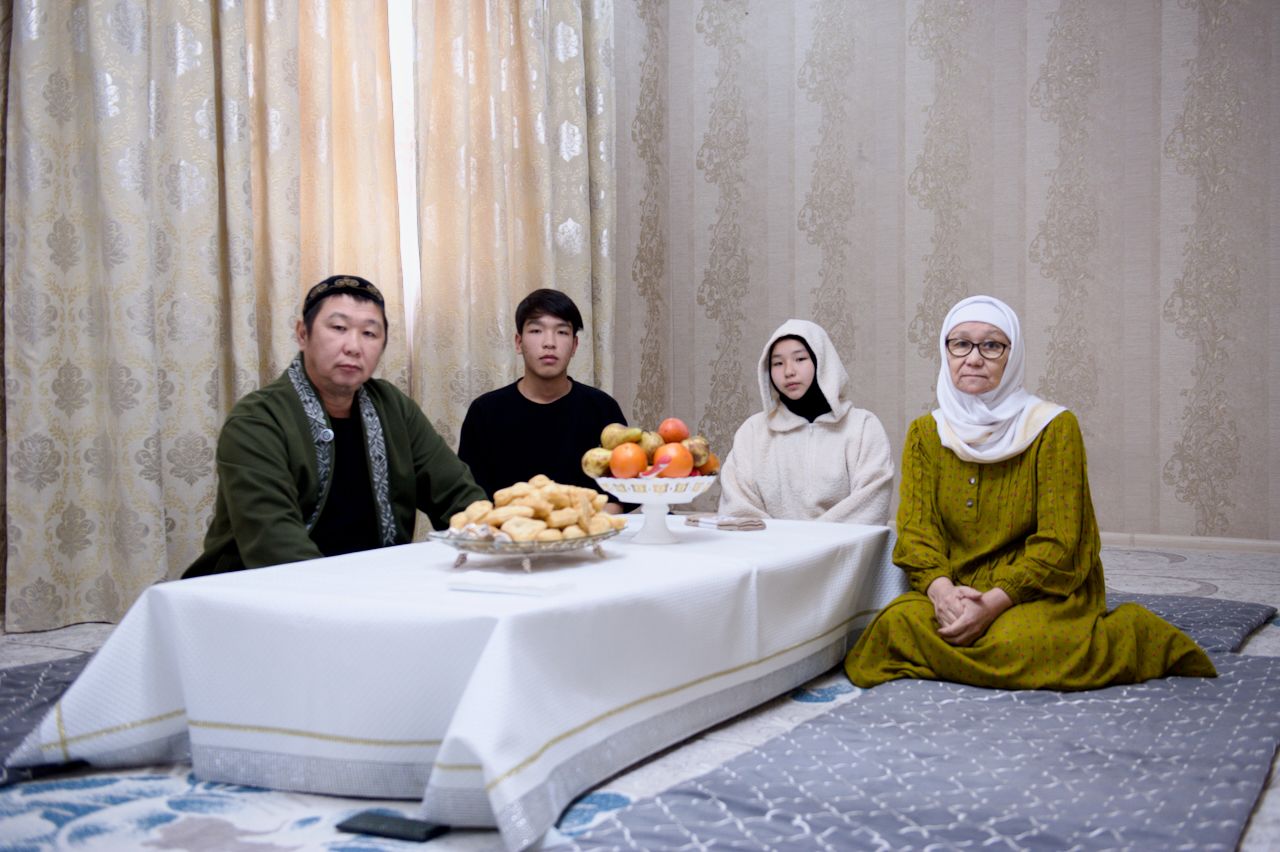
“The village leadership is carrying out large-scale work, and we, as active residents, try to contribute,” says Sayabek Nurkozhauly, group installation master at Ozenmunaigas. “Cleanliness, landscaping, and greening activities are regularly organized. As for problems, the primary one is environmental issues around the village, and the second is agriculture. I believe that products from local livestock farming should be sold within the village at affordable prices. In addition, Tenge lacks creative centers for children and youth, and there are no cinemas. It is necessary to develop creative spaces where national traditions can be revived and studied — working with felt, making wooden yurts, bows, and other traditional crafts.”
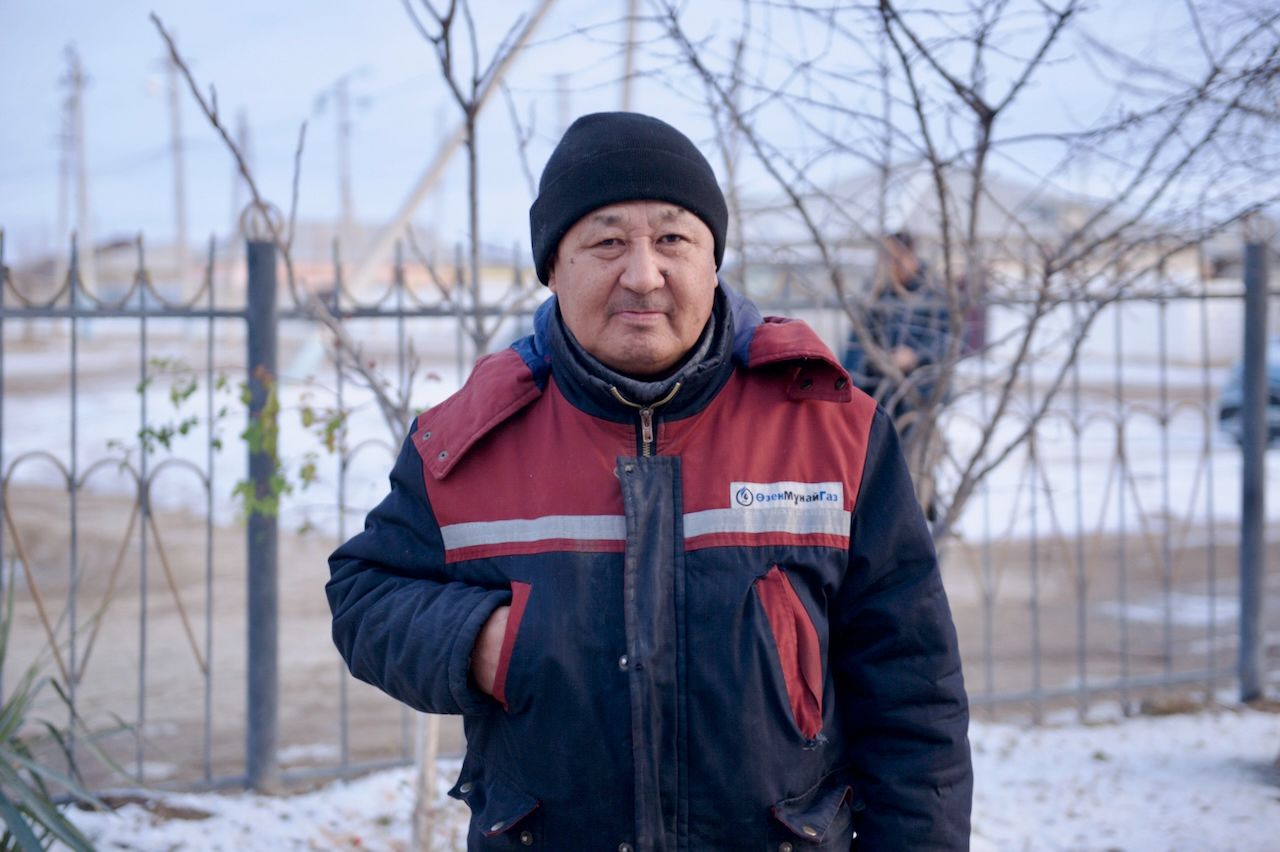
“I was born in another village in Mangystau region, but I have lived in Tenge for ten years,” shares Yerbolat Kyzylgulov. “I have two children and two grandchildren. By profession, I am an oil worker, but my health deteriorated, so I had to leave. Now I work as a laborer. There is no permanent work in the village, no enterprises. I hope the situation will change in the near future.”
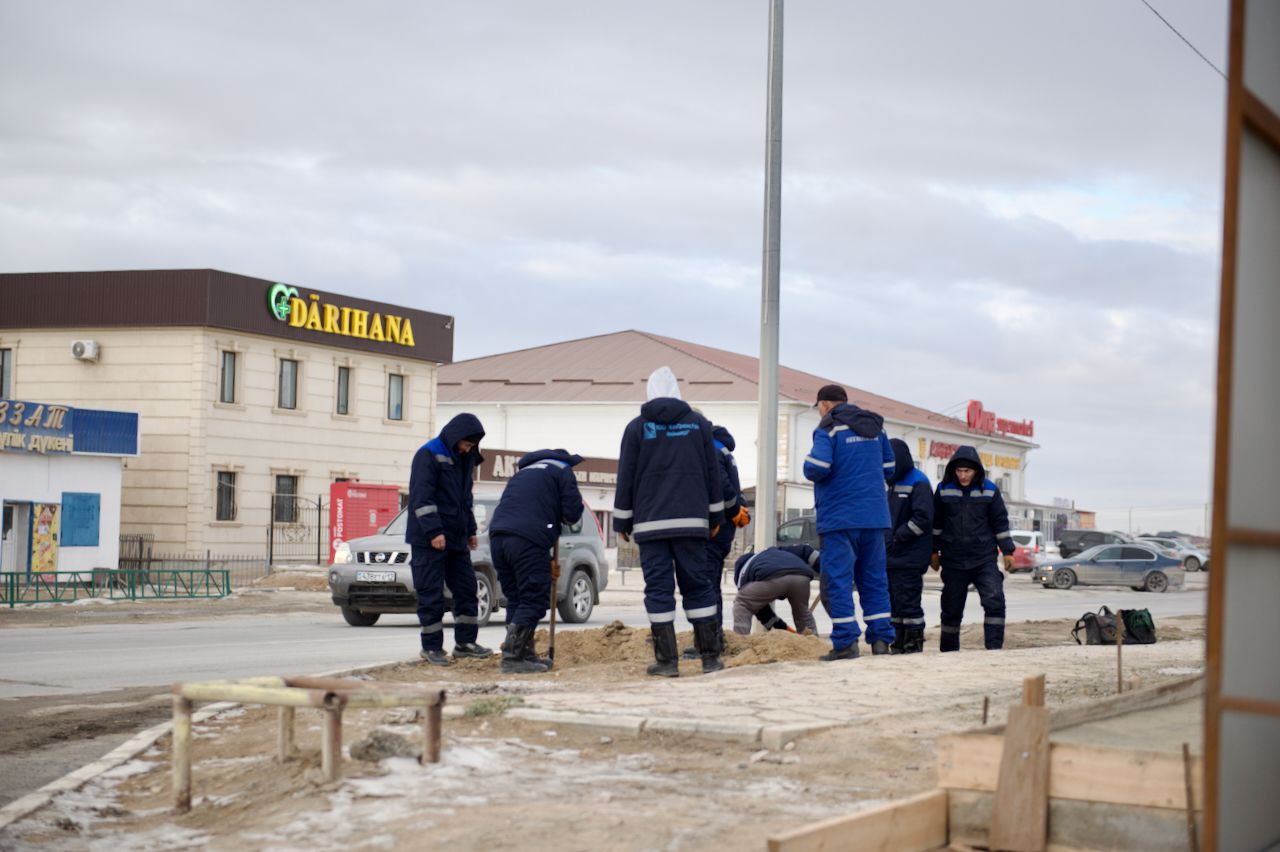
Today, Tenge is experiencing a complex but important stage of transformation. From a typical workers’ settlement entirely dependent on oil production, the village is trying to grow into a self-sufficient community with developed services and its own production. While some residents enjoy the long-awaited improvements, others rightly point to environmental risks and unstable employment. The future of the village depends on whether the local authorities can implement ambitious plans to diversify the economy without losing the trust of those who have built this region with their labor for decades.

Stories of kandas families returning to Batyr village, Mangystau Region: famine, exile, and a return to ancestral land nearly a century later.

A documentary story of Koldy’s fishermen, their lives and traditions…Photo report by Karlygash Nurzhan for Shanger.kz

Джонатан, волонтёре из США, который преподаёт английский в селе Шаульдер и изучает казахский язык. Фоторепортаж Карлыгаш Нуржан для Shanger.kz

Село Капал в Жетысу — место Шокана Уалиханова, Фатимы Габитовой и купца Атбасарова. Фоторепортаж о том, как жители возрождают архитектурное наследие.
Comments
No comments yet. Be the first to comment!